Security Council LIVE: DRC peace deals fail to halt fighting as Ebola deepens crisis
DR Congo: Peace Deals Struggle to Contain Fighting as Ebola Crisis Deepens
UNITED NATIONS, New York — The UN Security Council has turned its attention once again to the deteriorating situation in the Democratic Republic of the Congo (DRC), where diplomatic efforts to end fighting in the east are struggling to translate into security on the ground, while the country confronts the largest Ebola outbreak in its recorded history.
Meeting in New York on 29 September, Council members reviewed developments in eastern DRC and the work of the United Nations Organization Stabilization Mission in the Democratic Republic of the Congo (MONUSCO). The discussions came as clashes involving Congolese Government forces and the M23 armed group continue despite multiple diplomatic initiatives intended to establish a lasting ceasefire.
The situation has placed renewed attention on two parallel diplomatic tracks: the Doha process between the Congolese Government and M23, and the Washington process involving the DRC and neighbouring Rwanda.
Under the Doha process, the parties have been working to implement a framework for peace agreed in November 2025. Among the mechanisms established is a system for monitoring and verifying ceasefire commitments.
The Expanded Joint Verification Mechanism Plus, or EJVM+, has already carried out verification missions in Minembwe in South Kivu and Masisi in North Kivu, with MONUSCO providing support. The mechanism is regarded as an important test of whether diplomatic commitments can be independently monitored in areas where fighting continues.
Yet the gap between agreements reached at negotiating tables and conditions experienced by civilians remains substantial.
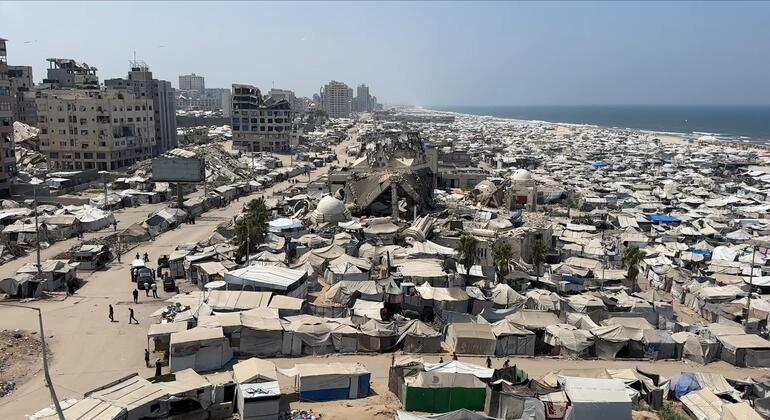
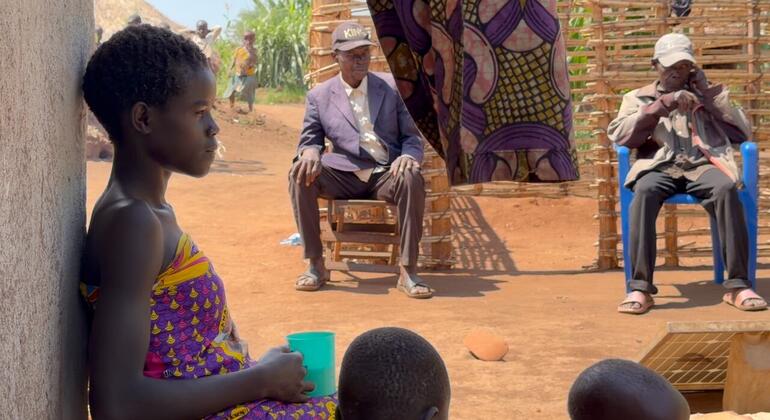
Recent fighting has continued in North and South Kivu, while displacement has extended the humanitarian consequences of the conflict into other areas. Thousands of Congolese have continued to flee violence, adding to already severe humanitarian needs in the east of the country.
DRC-Rwanda tensions remain unresolved
The conflict also remains closely linked to strained relations between Kinshasa and Kigali.
The DRC and Rwanda continue to accuse one another of failing to respect commitments made under the Washington agreements. Kinshasa has repeatedly accused Rwanda of supporting M23 and of involvement in eastern Congo. Rwanda rejects aspects of the Congolese accusations and has in turn accused the DRC of cooperating with the Democratic Forces for the Liberation of Rwanda, or FDLR.
These competing allegations have complicated attempts to establish a durable regional security arrangement.
The Security Council has previously called for an end to hostilities, the withdrawal of Rwandan forces from Congolese territory and an end to support for M23, while also demanding the neutralisation of the FDLR and calling on the Congolese Government to refrain from supporting armed groups.
A Joint Security Coordination Mechanism established through the Washington process has continued meeting to address these issues. Its latest round of discussions took place in Geneva on 16 and 17 September, while further planning involving the DRC, Rwanda and the United States is expected in October.
For the Security Council, one of the immediate questions is how MONUSCO can support the different monitoring arrangements without becoming caught between unresolved political and military disputes.
The UN mission’s mandate currently runs until 20 December 2026. Although Council members broadly support MONUSCO’s contribution to ceasefire monitoring, differences remain over the conditions under which the mission could expand such activities, particularly in South Kivu.
Ebola adds another emergency
The security crisis is unfolding alongside an extraordinary public-health emergency.
The DRC is experiencing an outbreak of Ebola disease caused by Bundibugyo virus that has expanded rapidly since it was first detected in May.
According to the World Health Organization’s latest figures, 8,116 confirmed cases and 3,924 deaths had been recorded in the DRC as of 27 September, with a case fatality rate of approximately 48 per cent.
The outbreak is now the largest Ebola epidemic ever recorded in the Democratic Republic of the Congo, surpassing the country’s devastating 2018–2020 outbreak.
By 23 September, confirmed infections had been reported across 63 health zones in seven provinces: Ituri, North Kivu, South Kivu, Haut-Uélé, Bas-Uélé, Tshopo and Sud Ubangi. Ituri remained the epicentre, while North Kivu had become the second most affected province.
The geographical overlap between disease transmission and insecurity presents an especially difficult challenge.
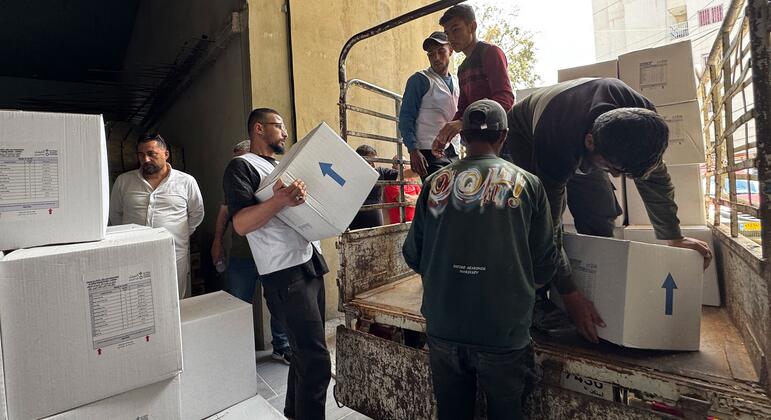
WHO has warned that conflict, displacement and limited access to basic services are interfering with surveillance, contact tracing, infection prevention and access to treatment. Large displaced populations and communities that health workers cannot easily reach can make identifying and interrupting chains of transmission considerably more difficult.
There have nevertheless been some encouraging signs. WHO Director-General Tedros Adhanom Ghebreyesus said earlier in September that transmission had begun declining in some of the most affected parts of Ituri, while South Kivu had reported no new cases since May. But the continuing number of cases and deaths means the emergency remains far from resolved.
The outbreak was declared a Public Health Emergency of International Concern in May.
Conflict and disease increasingly intertwined
The simultaneous security and health emergencies underline a broader challenge facing the international response in eastern Congo: neither crisis can easily be addressed in isolation.
Military insecurity restricts humanitarian access and weakens already fragile health services. Displacement makes disease surveillance more difficult. Ebola, in turn, increases pressure on communities and institutions already dealing with armed conflict, food insecurity and repeated displacement.
This makes implementation — rather than the announcement of additional agreements — increasingly central to international efforts.
The Doha and Washington processes have created structures for ceasefire verification, security coordination, disarmament and political negotiations. But continued clashes demonstrate how difficult it remains to transform those mechanisms into lasting security for communities in eastern DRC.
For the Security Council, the coming months will therefore test not only whether the parties remain engaged diplomatically, but whether ceasefire commitments can be verified and enforced, regional tensions reduced and humanitarian actors given sufficient access to communities caught between conflict and one of the most serious public-health emergencies the country has ever faced.
With thousands already dead from Ebola and civilians continuing to flee armed violence, developments in eastern Congo have become simultaneously a peace and security crisis, a humanitarian emergency and an international public-health concern.